
Electrical fault finding in Wollongong: how it works and what to tell your electrician
Most faults are found in 3 steps: you describe what happened, the electrician isolates the circuit, then tests it until the cause shows up. The more detail you can give, the faster this goes. This page covers the signs, the process and what to leave alone.
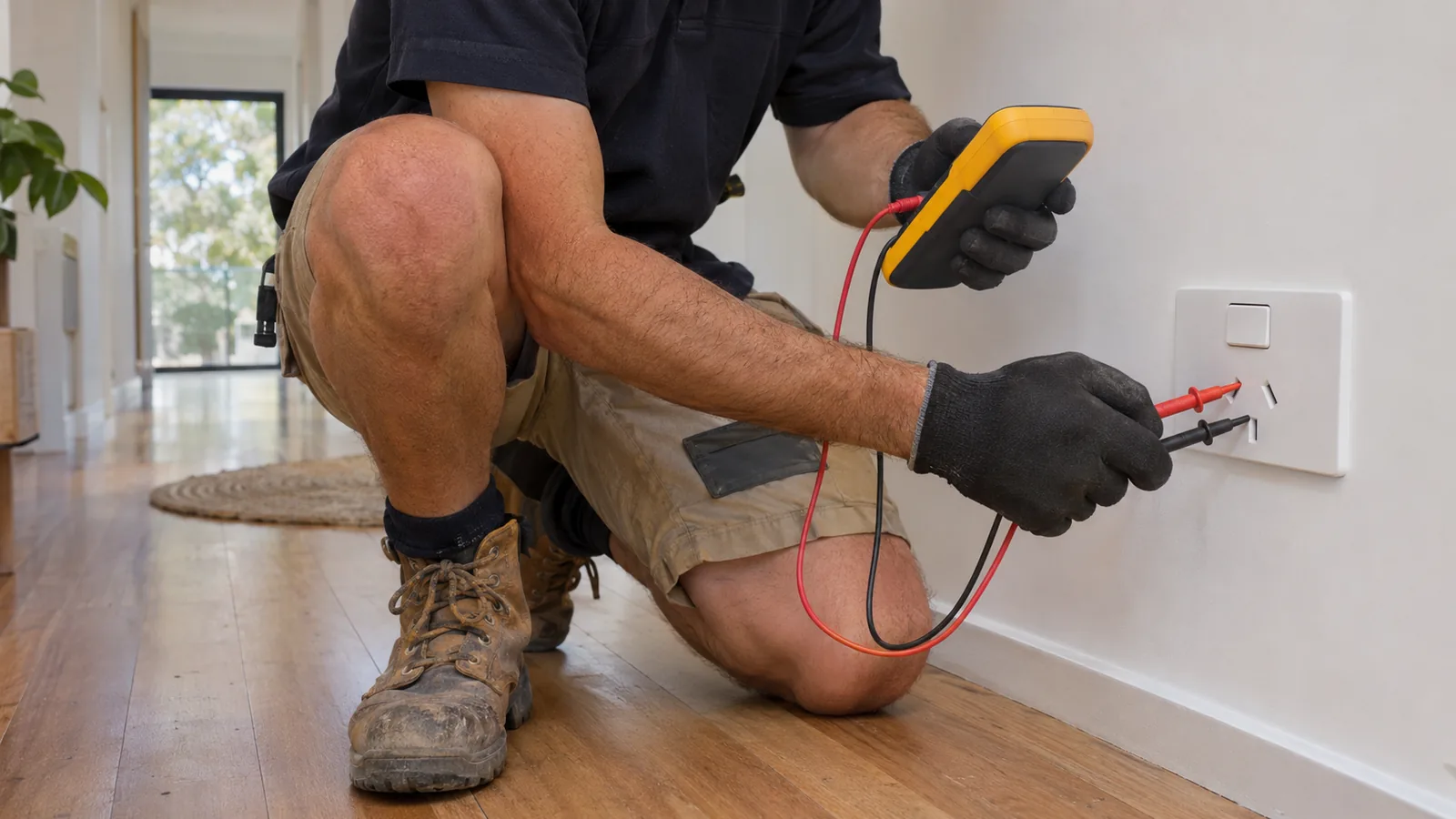
Fault finding means tracing a problem such as a tripping safety switch, a dead circuit, flickering lights or a warm power point back to its cause. A licensed electrician does it by isolating circuits and testing them. Note what happened and when, switch off anything that smells hot, and do not open fittings or the board yourself.
What are the warning signs of an electrical fault?
NSW Government and Endeavour Energy material point to the same set of signs. If you see any of these, get a licensed electrician to look.
- A tingle or small shock from a tap, appliance or switch.
- Sparking, loose or damaged power points and sockets.
- Flickering lights.
- A safety switch that trips often, or will not reset.
- A safety switch that does not cut power when you press its test button.
- Damaged cords, broken switches or a burnt smell near a fitting.
A tripping safety switch has its own page, so start with why a safety switch keeps tripping. If a single room has gone dead while the rest of the house is fine, read power out in one room first.
How does an electrician find the fault?
Every job is different, but the search follows a pattern. The electrician starts with your account of what happened, then works through the circuits in a set order so nothing is guessed.
- Listen to the history: when it started, what was running and whether weather played a part.
- Look at the board and its protection, and note which devices have operated.
- Isolate circuits one at a time to find which one carries the problem.
- Test the wiring on that circuit and check the fittings and connections along it.
- Disconnect appliances in turn to see whether a single item is leaking current.
- Repair the cause, retest the circuit and explain what was found.
The order matters because a safety switch can trip for a few different reasons, such as a damaged cable, moisture in an outdoor fitting or a worn appliance. Isolating one circuit at a time shows which reason applies without taking things apart at random.
What might each symptom point to?
| What you notice | Often points to | For now |
|---|---|---|
| Safety switch trips in wet weather | Moisture in an outdoor or garage fitting | Switch off what is outside |
| One room has no power | A circuit fault or loose connection | Leave the board alone |
| Flickering lights | A loose connection or supply issue | Note which lights |
| Tingle from a tap or appliance | Earth or leakage problem | Stop using it |
| Warm or discoloured power point | Loose connection or overload | Unplug what you can |
This table is a guide to what an electrician will look at, not a diagnosis. The same sign can come from more than one cause.
Something not right with the power?
Tell us the suburb and what you have noticed. We will say what kind of visit makes sense and what to switch off in the meantime.
What should you tell the electrician before the visit?
A clear account saves time on site. Write these down while they are fresh.
- When it first happened and how often since.
- What was running at the time, such as the oven, a heater or a pool pump.
- Whether it happened after rain or in hot weather.
- Which rooms, lights or power points are affected.
- Whether anything was plugged in, moved or renovated recently.
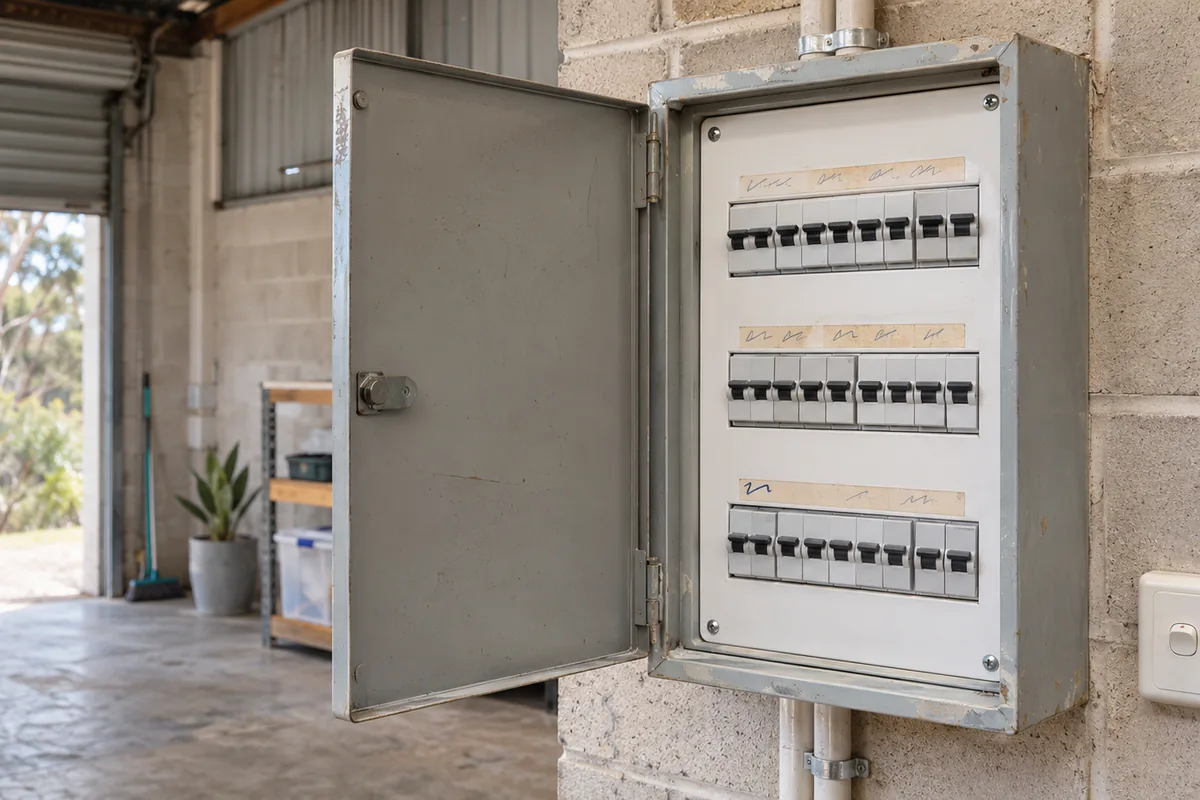
- A photo of the board, including any switches that are down.
If you are in Figtree, Corrimal or Fairy Meadow, include the suburb so we can plan the day. The Figtree page and Corrimal page give more on how we work in those areas.
What should you never try yourself?
Under NSW rules only a licensed electrician may do installation work, and the Government warns that DIY attempts can be dangerous. People have been killed doing electrical work unsafely. For a fault, that means no opening switchboards, no unscrewing power points or lights and no touching exposed wire. NSW also warns that old wiring can be brittle and should not be handled.
You can do some safe things. Unplug appliances you can reach without touching anything wet or damaged. Switch off the affected circuit at a wall switch. Keep children and pets away. If liquid has spilled on an appliance, NSW says to unplug it and have it checked before use.
If you smell burning, see sparks or someone has had a shock, treat it as an emergency. Endeavour Energy lists 131 003 for network emergencies, and our emergency electrician page explains how callouts work.
Will the fault come back after it is fixed?
It should not, if the cause was found and repaired. If an old board or old wiring is behind repeated faults, the electrician may suggest a safety inspection or a switchboard upgrade so the problem is not patched over. Costs depend on the job, so see the pricing page rather than guessing.
Fault finding questions
What is electrical fault finding?
It is the process a licensed electrician uses to trace why a circuit trips, loses power, shocks, flickers or runs hot. The electrician narrows the problem down circuit by circuit and tests the wiring and fittings until the cause is found.
Can I find an electrical fault myself?
You can note what happened and when, which helps a lot. The wiring itself is another matter. NSW says doing electrical work yourself can be dangerous and that installation work must be done by a licensed electrician, so leave opening fittings and boards to them.
Is a tingle from a tap or appliance serious?
Yes, treat it as a warning. NSW says to always treat a tingle or slight shock as a warning, and Endeavour Energy says not to attempt electrical repairs yourself if you have tingling taps, flickering lights or faulty appliances.
How often should I test my safety switches?
NSW recommends testing them about every six months by pressing the T or Test button and checking that the power on that circuit goes off, then resetting the switch. If the power stays on, or the switch will not reset, it needs to be checked and may need replacing.
Who do I call if there is no power at all?
First check whether neighbours are also out, since that points to the network. Endeavour Energy lists 131 003 for emergencies. If only your home is out, a licensed electrician can trace the fault on your side of the meter.
Need the cause traced and fixed?
Send a short note and a photo of the board. A licensed electrician will pick it up from there.
Sources, checked 15 November 2026: NSW Government, Electrical safety in the home; NSW Government, Avoiding electrical accidents; NSW Government, Safety switches protect you; Endeavour Energy, our network.