
Are ceramic fuses illegal in NSW? What Wollongong owners should know
Short answer: we found no NSW Government page that bans a home from keeping ceramic fuses. The risk sits elsewhere. NSW says homes built in or after 2000 usually have safety switches, so a fuse board often means a board with no shock protection. Check yours.
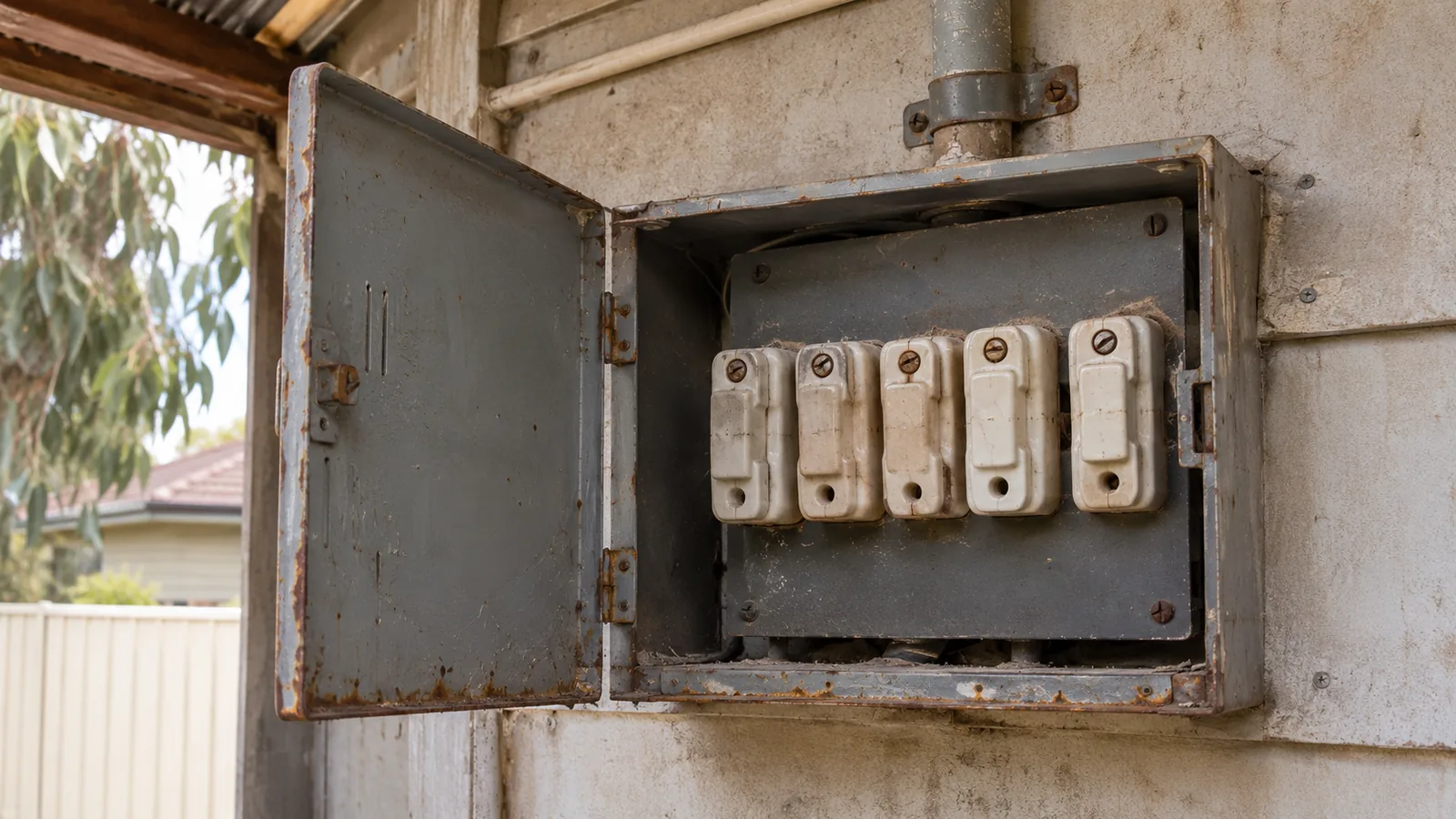
No NSW Government page we read says you must remove ceramic fuses. What they do say is that wiring older than 10 to 20 years can become a risk, that safety switches cut power at once when a fault is detected, and that all electrical installation work needs a licensed electrician. If your board has fuses and no safety switch, it is worth a proper check.
How can you tell if you have ceramic fuses?
Look at the board from the outside. Do not open covers or pull anything out. A fuse board usually has small porcelain or plastic holders in a row, each holding a short piece of fuse wire or a cartridge. A newer board has switches that flick up and down.
- Fuse holders you can lift out of the board: an older style.
- Rows of switches with a small test button marked T or Test: a safety switch is fitted.
- Switches but no test button anywhere: breakers only, with no safety switch.
If you cannot tell, send us a photo through the quote page. A licensed electrician can read the board from the picture and tell you what to ask for.
What do the NSW rules actually say?
We read the NSW Government electrical safety pages today. They do not set a date by which ceramic fuses must come out of an existing home. They make three points that matter to you.
- Owners must use a licensed electrician for wiring work, and DIY electrical work is dangerous and illegal.
- Wiring more than 10 to 20 years old may become a significant risk, and homes built before the 1980s should be inspected.
- Safety switches turn off power immediately when a fault is detected. Homes built in or after 2000 usually have them, and older homes should be checked.
That is a long way from a ban, but it is also not a green light. Rules for a particular job, such as a rental, a sale or an insurance claim, can differ. If you need a firm answer for one of those, contact NSW Fair Trading.
What is the difference between a fuse and a safety switch?
A fuse and a circuit breaker do the same job: they protect the wiring from too much current. NSW describes a circuit breaker as protecting the circuitry and wiring of your home. A safety switch does something else. It watches for current leaking out of the circuit, for example through a person, and cuts the power straight away.
| Board type | Protects wiring | Cuts power on a leak |
|---|---|---|
| Ceramic fuses only | Yes | No |
| Circuit breakers only | Yes | No |
| Breakers plus safety switches | Yes | Yes |
That last column is why we treat a fuse board as a conversation worth having. See the RCBO and safety switch comparison if you want to see how the protection can be laid out.
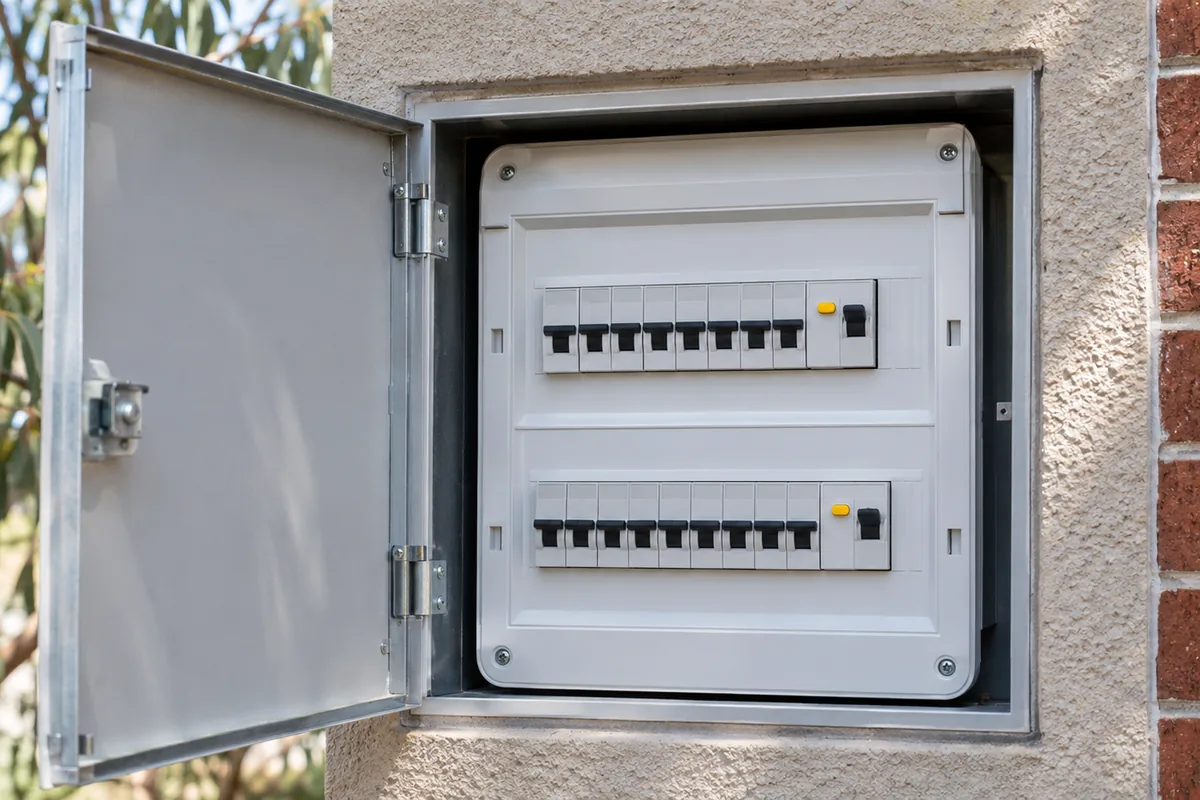
Not sure what your board has?
Send a photo of the front of the board and tell us the suburb. We will reply with what to ask for and what a licensed electrician would check.
When is it worth upgrading a fuse board?
There is no single trigger, but these situations push the answer towards yes.
- The board has no safety switch and the home was built before 2000.
- Fuses blow often, or something on the board runs warm or smells burnt.
- You are renovating, adding a kitchen, or adding a load such as an EV charger. See our EV charger guide for how that affects the board.
- You are selling, or an insurer or buyer has asked about the wiring.
- The wiring is old. NSW warns that older wiring can become brittle and should not be handled.
If none of these apply and the board is dry, labelled and in good order, there is less urgency. A safety inspection will tell you where you stand before you spend anything. The timing and scope are covered in our switchboard upgrade guide, and prices are on the pricing page.
Can I just replace the fuse wire myself?
We will not give steps for that, and NSW does not either. NSW rules say a licensed electrician must carry out installation work, and people have been killed doing electrical work unsafely. A fuse that blows more than once is telling you something about the circuit behind it. Switch off what you were running, leave the board alone and book someone to look.
If the power goes out and you can smell burning or see sparking, treat it as an emergency. Endeavour Energy lists 131 003 for emergencies, and our emergency electrician page explains how callouts work.
What happens when you enquire?
- You send a photo of the board and your suburb, for example Figtree, Corrimal or Dapto.
- An electrician looks at the picture and tells you what visit makes sense.
- You get a written quote for the work you choose, and a certificate once the work is tested.
Local readers can also check the Figtree and Dapto pages, or the wider Illawarra area page. If your question is about licences and paperwork, our certificate and licence guide goes through them.
Ceramic fuse questions
Are ceramic fuses illegal in NSW?
We found no NSW Government page that bans a home from keeping ceramic fuses. The bigger issue is protection. A fuse guards the wiring but does not switch off power when current leaks through a person, and NSW advises safety switches on all circuits. Any change to the board must be done by a licensed electrician.
Can I replace a blown ceramic fuse myself?
NSW says electrical installation work must be done by a licensed electrician, and that doing it yourself can be dangerous. A fuse that keeps blowing points to an overload or a fault, so leave the board alone and have it checked rather than fitting another one.
Does a ceramic fuse board mean my wiring is unsafe?
Not by itself. A fuse board usually means the board is old, and NSW says wiring more than 10 to 20 years old can become a significant risk. Only a licensed electrician can tell you the condition of the wiring behind the board.
Will I need a certificate after a switchboard upgrade?
Yes. The electrician who tests the work must lodge a Certificate of Compliance for Electrical Work, and you can ask for a copy to keep with your property papers.
How do I know if my home has a safety switch?
Look for a switch with a T or Test button on the board. NSW says homes built in or after 2000 usually have safety switches, and older homes should be checked by a licensed electrician. Test any safety switch about every six months.
Ready to have the board looked at?
Tell us what you can see on the board and we will point you to the right next step.
Sources, checked 15 November 2026: NSW Government, Electrical safety in the home; NSW Government, Safety switches protect you; NSW Government, Avoiding electrical accidents.